Pilot Sites
GREENSPIRE aims to develop sustainable heat symbiosis in different geographic areas. Six pilot sites have been selected in Belgium, Denmark, Greece and Spain.
A description of them is shown below:
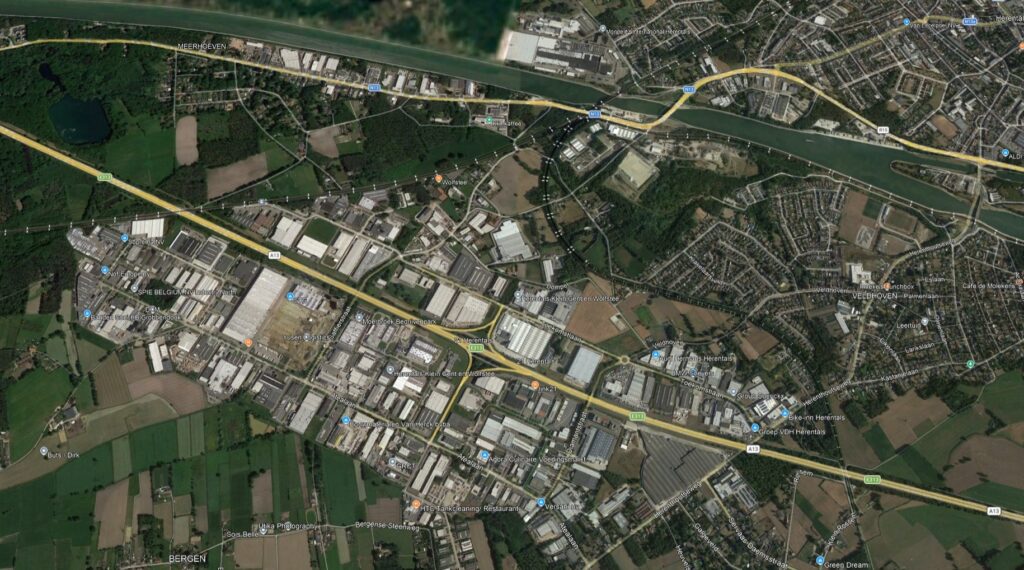
The industrial area Klein Gent in Herentals (ENA 21 Zone 3) has a rich history rooted in the economic development of the region. It is part of a broader industrial zone between Antwerp and Luik, that has seen growth since the 1980s. The companies in Klein Gent range from logistics and manufacturing firms to high-tech industries. Many of these businesses are connected to sectors such as construction, automotive, and food production. It is an important part of the industrial landscape of the Antwerp Kempen region.
Over the years, Klein Gent has evolved into a hub of 188 hectares for both local SMEs and larger international companies, benefiting from its strategic location near major transport routes, including the E313 highway. Several energy intensive companies are active in this older industry park in Herentals.
In a small area we find a concentration of production of organic fertilizers (Group De Ceuster), bitumen (Soprema), waffles and greenhouse horticulture (Den Berk). Introducing sustainable heat in this business area has the potential to drastically reduce greenhouse emissions for the city of Herentals.
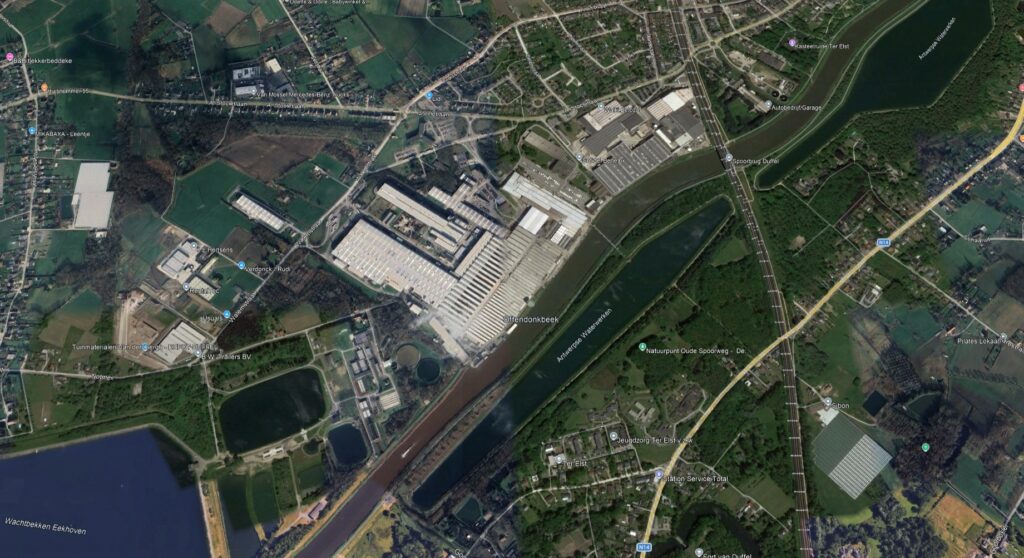
Business park Notmeir covers an area of 107ha, and is centered in the middle of a small municipality named Duffel. The business park is situated next to an important water production centre of Water-Link. It contains a small number of high energy-intensive companies with a total thermal energy consumption of 292 GWh: Aluminium Duffel, Toilet Paper Factory Sofidel and Walki Belcoat. This energy intensive business area is surrounded by large heat users like greenhouse horticulture companies and large public buildings (municipal swimming pool and sport facilities Rooienberg, high school St. Norbertus and psychiatric centre UPC Emmaüs).
At present each business and organization depends on its own heat source, while there is a lot of waste heat that could be exchanged between the different stakeholders. POM took the initiative in the past to perform a feasibility study to capture and distribute CO2 from the businesses to greenhouse horticulture companies. Since Cogeneration Heat Plants (CHP’s) became the norm in greenhouse companies, the low demand and low prices for external CO2-sources made the project not feasible at that time.
New publicly available data and analysis reveals a huge potential in this area. A large greenhouse cluster in the North of Duffel could use the sustainable heat ànd CO2 of the business park Notmeir. The local municipality of Duffel and regional district network operator Fluvius want to investigate the possibilities to set up a sustainable heat collaboration. POM is ready to facilitate this collaboration, supported by the knowledge and experience of the Greenspire partnership.
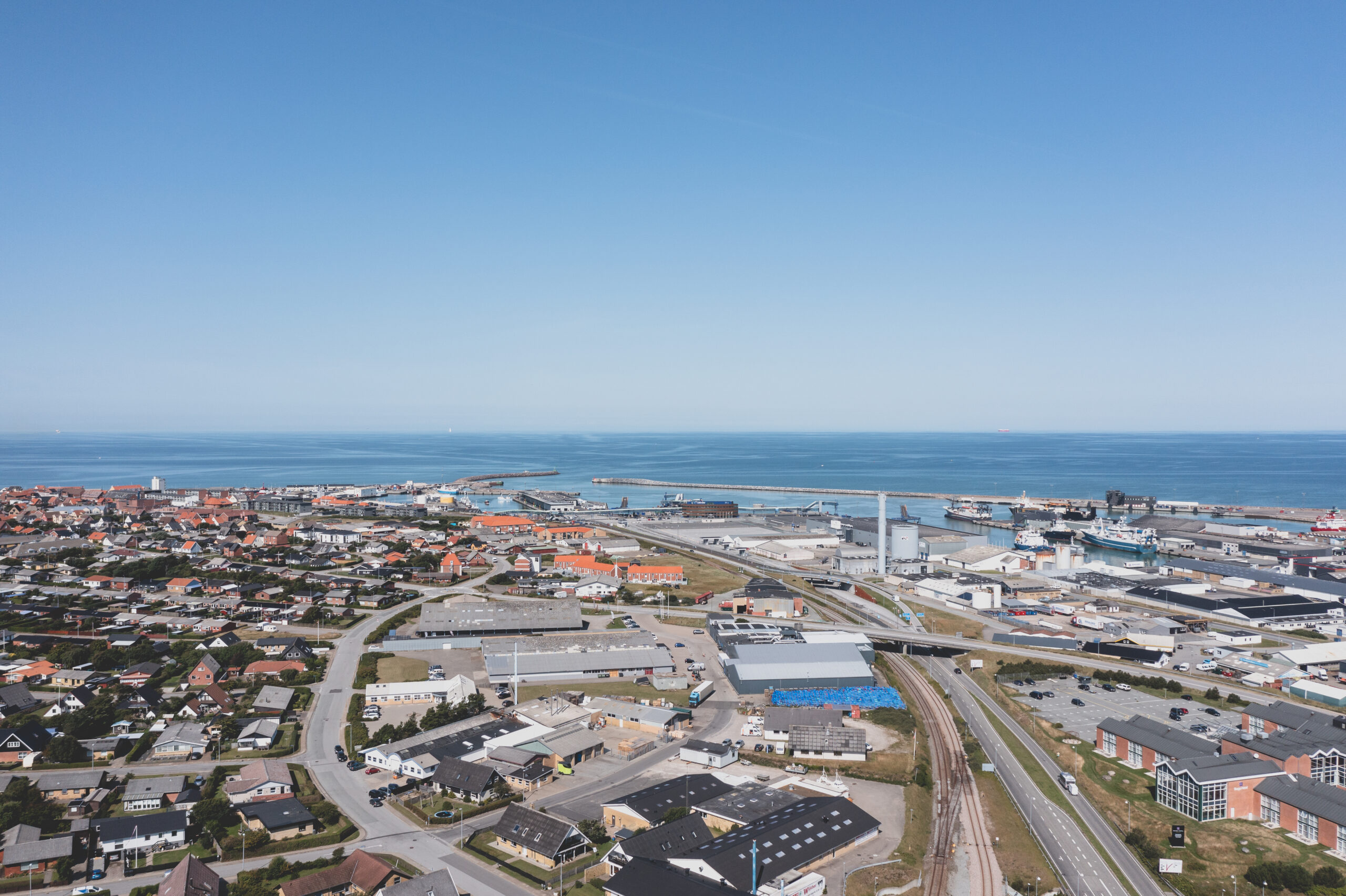
The port of Hirtshals is located at the very north of Denmark with strong ferry connections to Norway, Iceland and the Faroe Islands. The main business areas are transport & logistics, maritime service, fishing and circular development projects. Our vision is to lay the foundation for a future extensive industrial development where waste from one company or production is transformed into a valuable resource for others. As a facilitator of port-related industries and activities, we want to support onshore infrastructure synergies between existing and future port businesses. The circular mindset, where one company’s residual raw materials are used as valuable raw materials for another company, is at the heart of Port of Hirtshals’ ambitions for industrial symbiosis.
In 2022, the development company of Port of Hirtshals, Greenport North was established with the aim of accelerating the green transition of the port. In 2019, four 4.2 MW wind turbines were installed at the port as the first commercial wind turbines in Denmark. The wind turbines are located right next to the Skagerrak Sea, and due to the wind conditions in the area, the location is considered as one of the best in Denmark. A future wind turbine project is being planned, with additional capacity up to 40 MW, contributing to the port’s strategic goal of becoming the greenest port in Europe.
In the coming years, Port of Hirtshals will be expanded with a new entrance and an outer port basin as well as a 400,000 square metre logistics area for trailers and lorries to support the port’s continued development. The new business area is among other things aimed at companies that want to collaborate with others to promote the green transition and industrial symbioses. For example, companies involved in the production of climate-friendly fuels for shipping, power-to-x, circular industries, or other technologies based on future solutions supporting the use and production of green electricity.
In GREENSPIRE, Greenport North would like to continue the work already done to identify a business case for utilizing the large amount of surplus heat available at the Port of Hirtshals. A pre-study has indicated the technical feasibility of establishing an energy community with a heat and cooling system at the port area, but further work is needed to develop the business case and take care of the legal barriers.
At present companies in the business park are using district heating, electricity and gas for heating. The port has several cold stores and ice works for the fishing industry who could benefit from a water-based cooling system. There are also companies in the fish production and processing industry who could benefit from the heating. In addition, new projects like the CO2 storage and production of hydrogen are creating more surplus heat at the port of Hirtshals.
It is the goal for the port of Hirtshals and Greenport North that the GREENSPIRE project can assist in realizing the potential for creating the energy community with a heat and cooling system at the port area.
Northern Jutland has quickly become one of the fastest-growing regions in DK for green job opportunities, with an increase of 14% jobwise and 25% turnover growth from 2018-2021. With its strong wind energy production, maritime industry and large scalable CCUS projects, the region is well-positioned to impact the future of green energy, with several planned PtX productions hubs. Northern Jutland has a firm tradition of collaboration sustainable transition initiatives, for instance the Industrial Symbiosis North (POARD, AAU & Aalborg involved – Industriel Symbiose Nord) offers guidance on establishing sustainable business parks, sustainable action plans and calculated environmental impacts (each symbiosis is found to have an energy saving potential on 264 MWh, which is equal to 8 DK households per year).
In GREENSPIRE, the hub in Aalborg seeks to identify the potential of an energy (heat and cooling) synergy among various companies at the Port of Aalborg business park and its hinterland. At this moment, some companies in the business park use district heating, and others use electricity, gas or other forms for heating. Furthermore, an increasing need for cooling is registered in the business park. At the same time, new possibilities arise with the development of the CCUS sector, and the development of technologies for surplus heat collection.
The waste or surplus heat coming from a planned PtX plant, from the industrial processes of the companies at the POARD’s business park, and the surplus heat from the cement factory that is not delivered to the city of Aalborg could be used by a new CO2 storage facility at the port. Due to process innovations, there will be more excess heated water at a significant scale to repurpose for a symbiotic exchange with for example a CO2 heating process and reverse cooling water for industrial use at the cement factory for drying processes and clinker cooling, among others. The CO2 storage facility may also provide waste cooling and green CO2 to the E-methanol production plant to improve energy efficiency in the cooling electrolysers, condensation of methanol and refrigeration storage.
The GREENSPIRE project offers the hub in Aalborg the opportunity to use and optimize the synergies regarding more efficient cooling systems for the common benefit of other industrial companies at and around Port of Aalborg’s business park, hinterland and greater Aalborg.
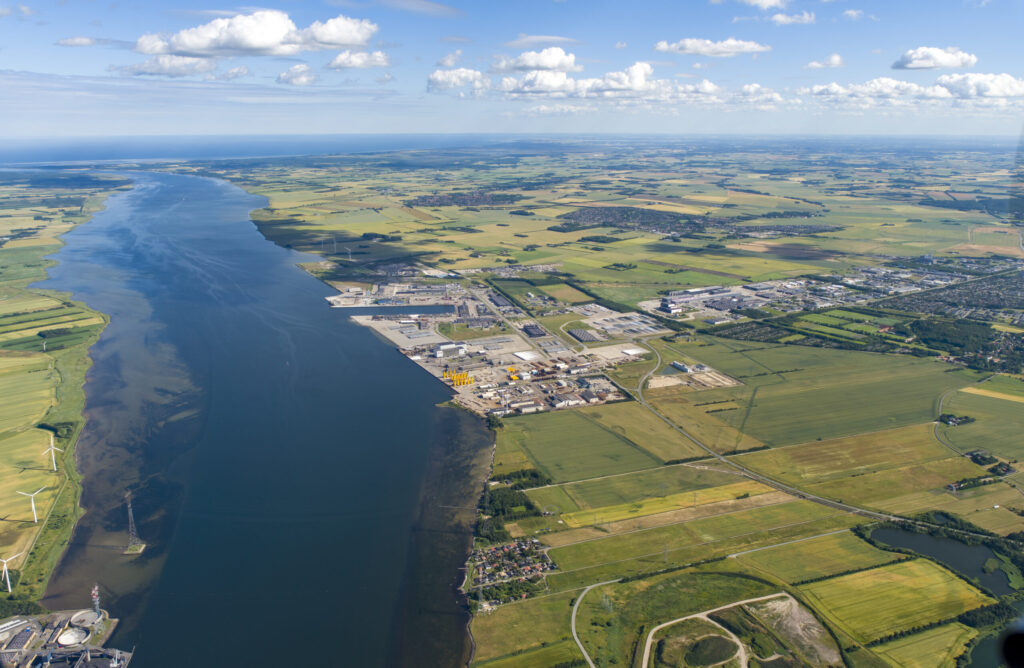
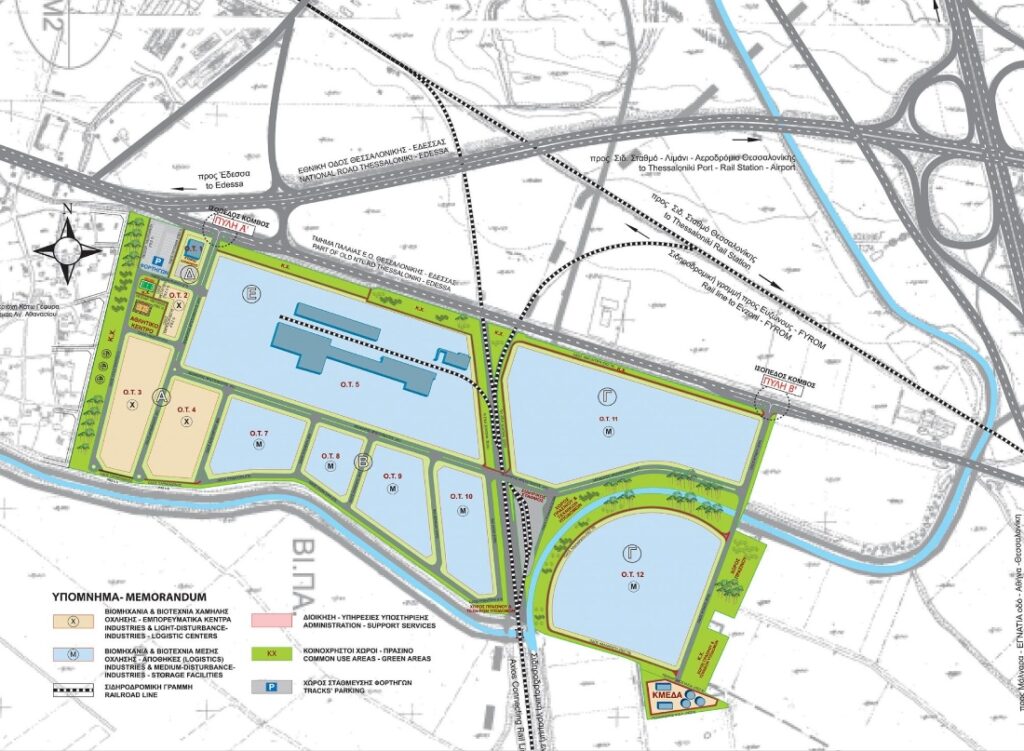
Thessaloniki Business Park (TBP) is a contemporary, well-structured Type A2 Business Park featuring comprehensive infrastructure. It is a cutting-edge business incubator of global standards, providing security and stability throughout the construction and operation of established enterprises, providing Ideal space for the construction of facilities of Industries – Crafts – Warehouses etc. The park delivers contemporary infrastructure and advanced operational services, while being strategically positioned for accessibility and services, through highways and railways.
Thessaloniki Business Park (EPPATHE) is a privileged industrial area of approximately 395 hectares, suitable for the establishment of activities of the secondary and tertiary sector such as: Industries, logistics centers, energy production / energy storage units, business incubators and research centers. The terrain of the park is level with negligible inclines. The property is privately owned and designated as a Medium-Low Nuisance Industrial Park, possessing the following attributes:
- Total area: 988,000 sq.m.
- Industrial activities area: 684,000 sq.m.
- Available plots: 232,000 sq.m.
- Shared services area: 45,000 sq.m.
- Roads – pedestrian streets: 95,000 sq.m.
- Green areas- Sports Facilities: 162,000 sq.m.
- Existing Industrial Activities: 461,000 sq.m.
The park infrastructure includes a 10km road network compliant with safety regulations, featuring comprehensive signage, sidewalks, and street lighting. It also has an integrated sewage system with a waste treatment facility, as well as a train cargo terminal capable of accommodating containers, large loads, and both palletized and non-palletized goods on wagons. The primary energy-consuming entity in the park is Macedonian Paper Mills (MEL), the largest paper recycling and cardboard manufacturing company in Greece and one of the largest in Southeastern Europe. The thermal demand surpasses 300 GWh/year and the electricity demand 200 GWh only for the production processes.
The primary companies in the park are prepared to implement both photovoltaic and solar thermal systems to enhance energy efficiency and transition to renewable energy sources. The amalgamation of Thermal Energy Storage (TES) with additional renewable electricity generation technologies, alongside heat pumps, can facilitate further decarbonization of the energy production process.
The local heat demand is met by an 8.8 MW Power Plant, which facilitates the utilization of released thermal loads in the production process, alongside a 20 MW Biomass Plant that generates over 95% of the thermal energy produced in the park. The annual CO2eq emissions are estimated at approximately 8,000 tCO2eq for scope 1 and approximately 40,000 tCO2eq for scope 2. Within the Industrial Park of Thessaloniki, two air quality measurement stations have been installed, whose data are transferred to a database. The quality elements measured are: CO,CO2, NO2, Relative Humidity, Sound Leve, Temperature.
Getafe is one of the most industrialized cities in the Community of Madrid (Spain), and that is the main reason why the city has all its industry spread across numerous industrial estates.
In 2024, Getafe City Council announced urban development works for the Getafe Terminal project, which they say will mark the start of the rehabilitation of the Los Ángeles industrial area, the oldest in the city. Getafe Terminal will house a logistics park by Goodman, a real estate and logistics development company, and a commercial and leisure park. The area will have a dissuasive parking lot with 1,000 free spaces close to the Getafe Industrial station. It will also have a pedestrian and cycle walkway over the train tracks to connect with the Cerro de los Ángeles.
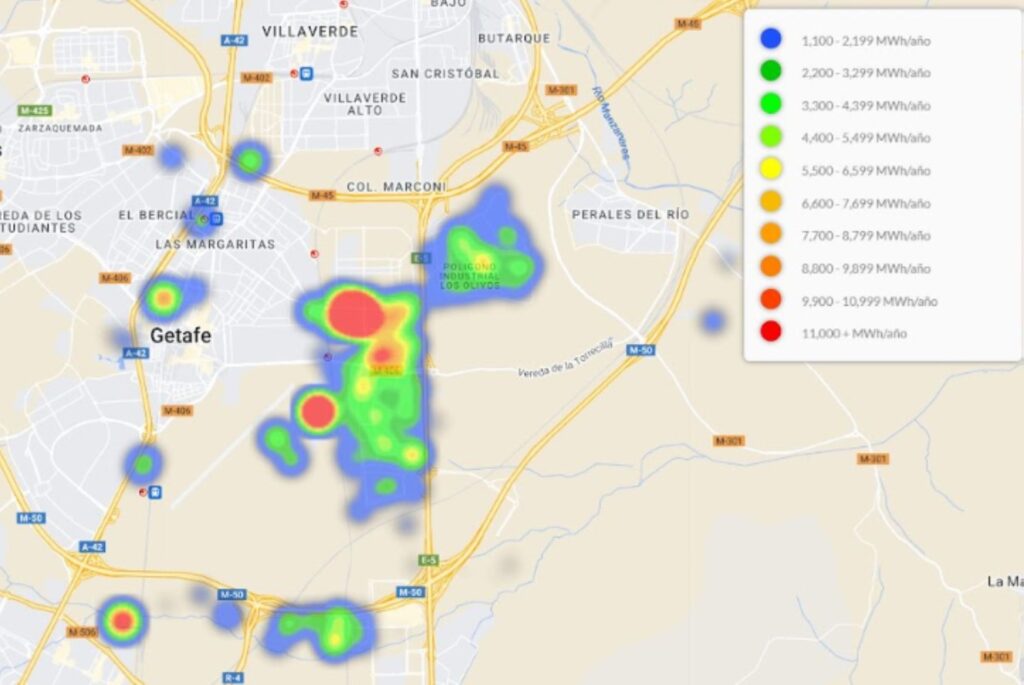
Los Angeles industrial park includes a very wide range of business, where some of the companies have a high heat demand as it is shown in the picture above, mostly the ones related with metal, automotive, chemical and food & beverage industry. Some businesses have an almost negligible heat consumption such as logistics and transportation, car workshops, and restaurants.